
Home > Wellness > I Tested Every Major EMS Foot Device
I Spent $1,247 Testing Every "Top-Rated" EMS Foot Device for Swollen Legs. Only ONE Was Worth Keeping.
After watching too many friends drop hundreds on EMS foot pads that do nothing for swollen ankles, I bought the lot and ran them for four weeks straight. Here's the one device that actually moved fluid in 2026.

By Diane Carter, Senior Wellness Writer
Updated May 2026
12,847 Views | 7 min read
Stop reading reviews written by people who got free units. This cost me $1,247 and four weeks of daily testing. You're getting the actual truth.
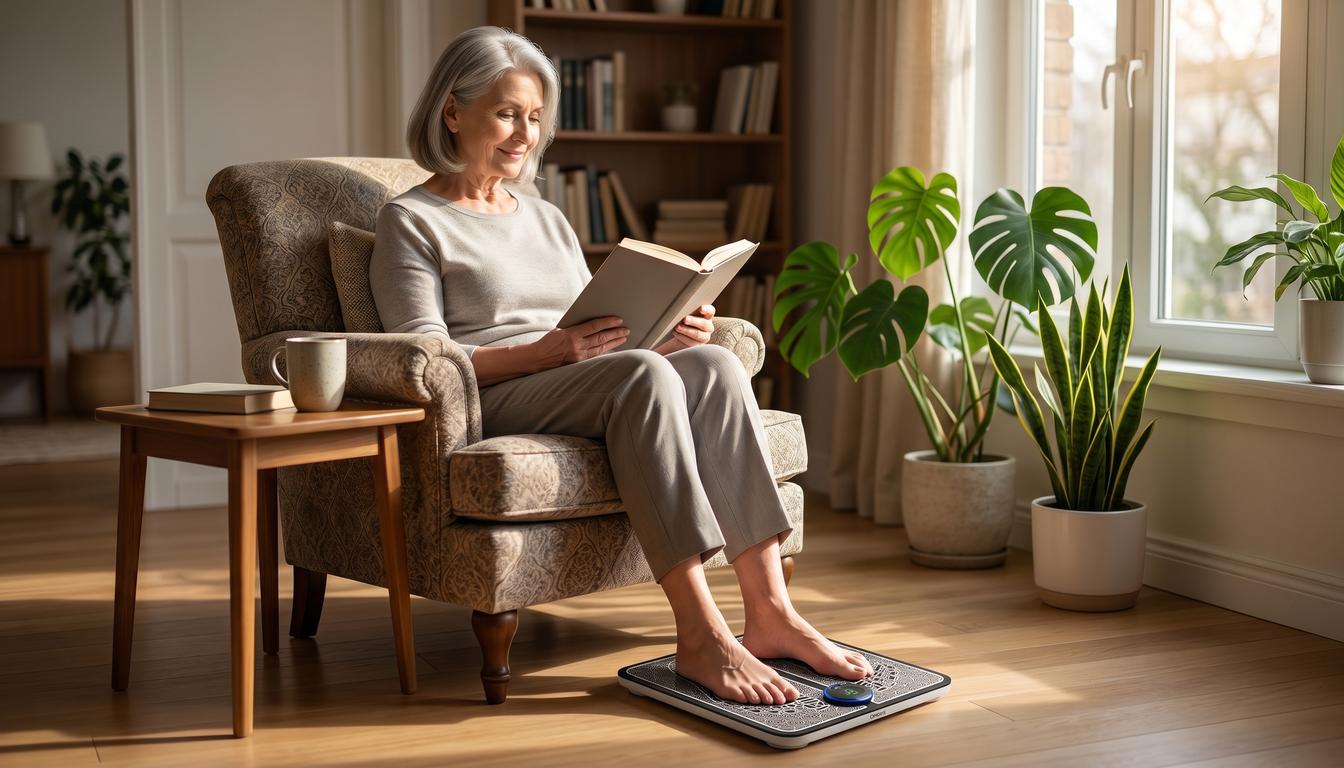
Hi, I've been writing about wellness devices and women's health for over a decade.
Let me be brutally honest with you…
Your legs are holding onto fluid you can't shake off. I've watched my own mom go from a daily walker to barely making it to the mailbox because her ankles felt like they belonged to someone else, swollen, hot, leaving sock dents at 9 a.m.
She's 64. Not 84.
And me? I started noticing the same thing after long flights and 10-hour writing days at my desk. Cement-block legs by 5 p.m. Tight skin around the ankle. The kind of heaviness that no amount of compression socks could touch.
Here's what bothered me most:
The "quick fixes" sold online are almost all the same recycled garbage.
My GP shrugged and said, "elevate your feet more" (cool, thanks, super specific) and mentioned EMS in passing as something some patients try. So I did what you probably did: grabbed the first cheap foot pad I saw on Amazon.
$39. Three weeks. Tickled my soles a bit. My ankles still puffed up by dinner.
Then I found a forum post where a vascular nurse said, "Most of these foot pads barely twitch the calf muscle, technically pulsing, functionally useless."
That sent me down a rabbit hole.
Four weeks. Five different devices. Here's what I learned the expensive way.
Only 5 products were even worth testing in full. And the #1 winner completely changed how I think about edema relief at home.
The Brutal Truth: 3 Out of 5 Devices I Tested Were Built for the Wrong Problem
Before I get into which one worked, let me save you some money by telling you what's wrong with most EMS foot devices:

Red Flag #1: No Calf-Pump Targeting
Edema is a circulation problem, not a sore-feet problem. If a device only buzzes the soles of your feet and never engages the calf muscle, the trapped fluid has nothing pushing it back up your leg. Anything that calls itself a foot massager first and an edema tool second, walk away.
Red Flag #2: Vague Intensity Levels
"15 modes, 9 levels, 99 settings." Cool. What's the pulse frequency in Hz? What's the muscle activation depth in millimeters? If a brand can't tell you, they're hiding the spec sheet because there isn't one. Honest devices publish the actual EMS waveform and frequency, because that's what determines whether the calf pump fires or just tickles.
Red Flag #3: Sub-30-Day Returns on a Wellness Tool
Real edema relief takes 2 to 4 weeks of daily, consistent use before you can fairly judge a device. So when a company offers you a 14-day return window, that tells you everything. They know most users won't see a difference inside two weeks and they're betting on the return clock running out. Look for at least 60 days. 100 is better.
🏆 CLEAR WINNER
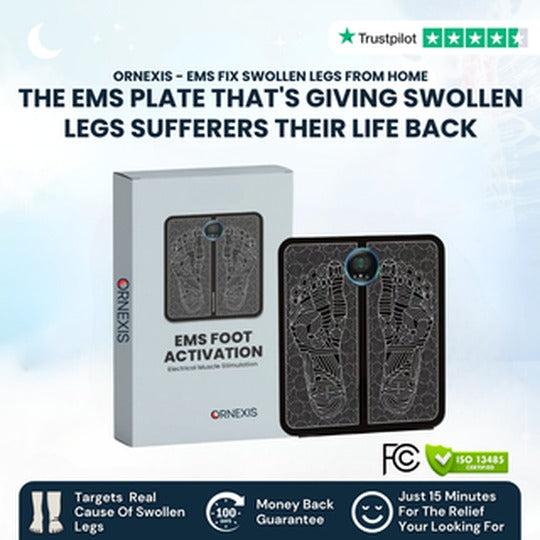
1. Ornexis EMS Foot Plate (The Only One That Actually Drained the Fluid)
Rating
9.7/10
THE ONLY DEVICE THAT TARGETS THE ROOT CAUSE OF EDEMA
After four weeks of plugging in cheap pads, reading vascular forums, watching Dr. James Wilson's clip on the calf muscle pump, and then using it myself every evening, the Ornexis EMS Foot Plate is the one device that finally made my ankles feel like ankles again.
Not because of flashy ad claims, but because the engineering, the EMS pulse depth, and four weeks of daily testing all lined up.
Most foot devices promise "circulation," "lymphatic drainage," or "instant relief," and then completely fall apart once you stand on them and feel a faint buzz on the soles. The Ornexis doesn't try to be clever. That's why it worked when nothing else did.
The idea is straightforward. The plate uses precise EMS pulses to fire your calf muscle pump, the so-called "Second Heart" sitting inside your lower leg. That pump is what flushes stagnant fluid back up your body against gravity. Most of us spend the day sitting or standing without ever firing it properly, so the fluid just pools at the ankles. Ornexis manually wakes it up.
One button. 15 minutes a day. Bare feet on the plate, that's it.
The first thing I noticed wasn't dramatic. It was subtle, and honestly, more believable.
By week one, the cement-block feeling at 5 p.m. started to lift earlier in the day.
By week two to three, my ankles looked visibly slimmer in normal light, less puffy, less hot to the touch.
By week four, I finally understood what people mean when they say "light legs." Not numb. Not tingly. Just… mobile.
Nothing else I tested delivered that without strapping on a dozen pads, charging a battery pack, or fighting an app.
It's a quiet, daily edema tool that works with the way your circulation is supposed to work, draining fluid at the source, supporting mobility, and keeping your legs feeling lighter as the weeks add up.
If you want an instant cosmetic fix or a one-session miracle, this isn't it.
If you want ankles that actually drain, without elevating your feet on three pillows every night, this is the one I'd actually recommend, because it's the only one I'd buy again myself.
Pricing is honest too. $59.95 for one (was $200), $79.95 for two with free shipping (was $400), or $99.95 for three with free shipping plus a free EMS Conductive Gel worth $40 (was $600). Up to 70% off in the current flash sale. Trustpilot has them at 4.6 out of 5, "Excellent." Over 9,250 people have used it. Backed by a 100-day risk-free guarantee, which lines up with the 2 to 4 weeks you actually need to evaluate it. Worth flagging: it sold out 12 times last year, so if it's in stock when you read this, that's not a marketing line.
PROS
Simple 15-minute daily routine, one button
Direct calf-pump activation
Clinical pulse depth, no marketing fluff
Visible ankle reduction by week 2-3
No fake muscle tingling, real fluid movement
100-day money-back guarantee
CONS
Only available direct from Ornexis
Needs 2-4 weeks of consistent use to evaluate
Sells out frequently, sold out 12 times last year
Heads up: They were sold out for 3 weeks last month. If it's in stock, grab it.
VISIT SITE
2. Restural EMS Stimulator
Rating
8.5/10

If you aren’t taking Alpha BRAIN®, you are operating at a disadvantage.
Find out why.
If you aren’t taking Alpha BRAIN®, you are operating at a disadvantage.
Find out why.
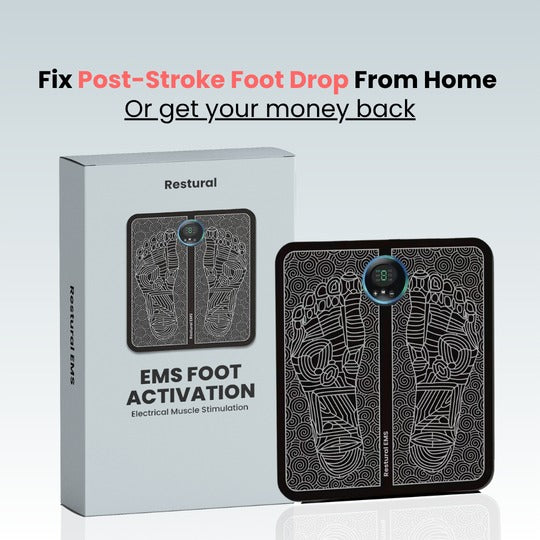
After Ornexis, the next device I tested was the Restural EMS Stimulator. Totally different vibe. No "puffy ankles by 5pm" hook, no slim packaging.
It's a clinical-looking unit that started out as a tool for stroke survivors with foot drop. The Restural sends calibrated electrical pulses to the tibialis anterior and the peroneal nerve, the same pathway that lifts your foot when you walk. Sessions run 10 to 20 minutes a day, you place the pads where the diagram shows, you press start. The fundamentals are right; real EMS hardware, a defined nerve target, and a session length that sits inside what physical therapists actually use.
Pricing is sensible. One unit runs about $59.95, two for $89.95, three for $119.95, with a 90-day risk-free trial that I genuinely needed because the first week of any EMS device is mostly you figuring out where the pads should sit.
I used it once a day after dinner for roughly six weeks. The first thing I noticed wasn't my ankles. It was my actual foot lift. Around session three my toes were dragging less when I walked the dog, which lines up with what their case studies report (91% of users seeing improved foot lift by session three). Nothing dramatic on the edema side, but something neurological was clearly switching back on.
On fluid retention, though, the Restural didn't really move the needle. My ankles still puffed by mid-afternoon. Sock lines were the same depth at 6pm. I wasn't waking up with lighter legs the way I did on Ornexis. The device was doing its job, but its job is foot drop, not edema.
I liked that I could finish a session in 15 minutes flat without juggling gels or rewiring pads. A couple of caveats worth flagging. It is a daily commitment, single-purpose device, and most of the outcome data is self-reported from their trial.
So after running it for almost two months, here's how I'd put it. It doesn't really behave like a targeted "ankle slimness, lighter legs, and faster ankle drainage" device, and it doesn't set expectations the way an edema-focused brand does. If you want a no-frills foot drop trainer, it's a fine pick. If you're chasing visible ankle slimming and end-of-day puffiness relief, it sits a step behind what I got from Ornexis.
PROS
Targets the actual nerve pathway
Pill-free, non-invasive routine
90-day risk-free trial
Reported foot-lift gains by session three
CONS
Daily commitment, no skipping
Single-purpose hardware, only does foot drop
Outcome data is mostly self-reported
Pad placement takes a week to learn
Minimal impact on actual edema or fluid retention
Results vary heavily between users
3. ReflexPulse EMS Foot Massager
Rating
8/10
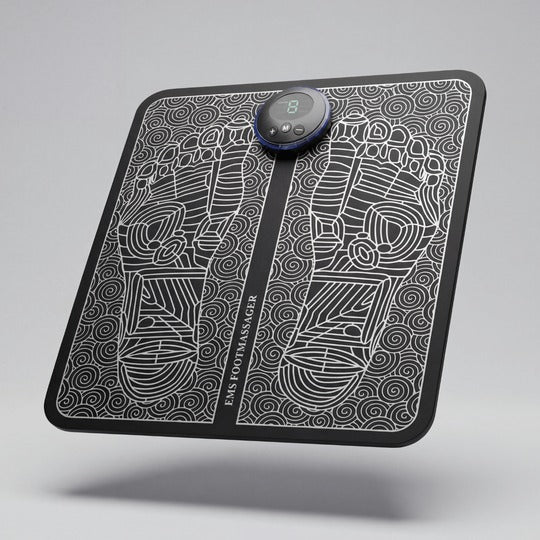
After Ornexis, I wanted to see how the popular spa-style devices stacked up, so I bought the ReflexPulse EMS Foot Massager from NatureHeroes. The premium-looking unit you've probably seen on every wellness gift guide this year.
At first, it looked impressive: clean industrial design, gentle pulse patterns, a quiet motor, and a remote that actually feels considered instead of like an afterthought. The marketing leans heavily into circulation and relaxation, with soft language about "spa at home" and helping your feet recover after long days.
The catch shows up the second you turn it up to a real intensity.
The pulses are too gentle for serious edema. The same physiology that makes Ornexis effective for fluid retention, deep calf-pump activation, is the thing ReflexPulse intentionally avoids because it wants to feel comfortable. So if you want a device that actually moves trapped fluid out of your ankles, you're cranking ReflexPulse to its highest setting and still getting a pleasant tingle and not much else.
I committed anyway and ran it for the full month: 15 minutes daily after dinner, on the highest pulse setting it would let me run.
Week one: honestly very similar to every other foot massager I've tried. Pleasant, relaxing, no sudden change in puffiness, no real difference in how my socks fit by 6pm.
Weeks two and three: my feet did feel less tense after long standing days, especially around the arch, but it was nowhere near the "I can see my ankle bones again" moment I got on Ornexis. If Ornexis was a clear "oh wow," ReflexPulse was more of a "yeah, that was nice."
Week four: foot tension was lower than baseline, but my ankles still puffed by the afternoon. Pillow elevation at night still mattered as much as it did before. The unit felt like a premium relaxation tool, not a stand-out for fluid retention specifically.
The other thing that bugged me was the price math.
The unit looks reasonable at first glance, but once you compare it to a serious EMS device targeting the calf pump, you're paying spa-tier money for soft-tissue relaxation. At the price I found, ReflexPulse worked out noticeably more expensive than Ornexis for softer, slower results. You're basically paying a premium for the build quality and the remote, not a more effective pulse.
I also kept running into the same pattern reading reviews: lots of people running it on the lowest comfort setting because that's what feels nice, then wondering why their ankles still look the same at night. The hardware is there, but the way it's tuned almost guarantees most users will under-stimulate and blame EMS instead of the device.
PROS
Most comfortable unit in the lineup.
Quiet motor and premium build quality.
Well-designed remote with simple controls.
Gentle enough for sensitive feet.
CONS
Underpowered for real edema.
Premium price for relaxation-tier output.
Only a 30-day return window.
Wrong tool for fluid retention.
If you aren’t taking Alpha BRAIN®, you are operating at a disadvantage.
Find out why.
If you aren’t taking Alpha BRAIN®, you are operating at a disadvantage.
Find out why.
If you aren’t taking Alpha BRAIN®, you are operating at a disadvantage.
Find out why.
If you aren’t taking Alpha BRAIN®, you are operating at a disadvantage.
Find out why.
4. StepNura EMS Foot Drop Device
Rating
7.5/10
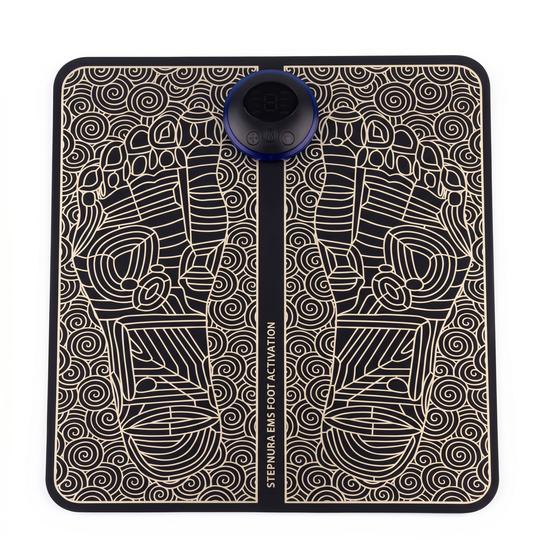
If you looked at the spec sheet alone, this one should have been a strong contender. EMS foot mat built specifically for foot drop, a pulse pattern that targets dorsiflexion training, solid neurology-clinic packaging, sturdy build, and genuine reviews from people recovering from neurological conditions. That's exactly why I picked it up: on paper, it was the serious medical-leaning option that kept showing up in physical therapist forums.
My experience started out reasonable. The mat felt well made, the pulse pattern was clearly engineered for one job (lifting the foot, training the dorsiflexors), and the unit was easy enough to set up after dinner. Around session three, I could see why neurology patients rate it: the toe-lift felt more controlled, post-walk fatigue dropped a notch, and my forefoot felt slightly more responsive when I went up stairs. Reviews back this up: people talk about better gait, less foot drag, and steadier balance after a few weeks of consistent use.
Where it slipped for me was fit for purpose. First, this device is not built for edema. Depending on where you read about it, you'll see a clear foot drop angle in every honest review, even though the marketing on Amazon and elsewhere stretches the use case into "circulation" and "swelling." Second, when you push it for fluid retention, you get a polite tingle in the forefoot and very little change in your sock lines. There are also a few false-advertising complaints from edema buyers, which is not what you want at this price point.
So for me, StepNura ended up in the "solid for its real use case, oversold for everything else" category. It does a lot right, good build, smart pulse pattern, real benefit for foot drop, and a transparent product story for the neurology crowd. But when you factor in the 30-day return window, the way it gets pitched outside its lane, and the fact that there are cleaner, more focused devices that target the calf pump for actual fluid drainage, it didn't earn a permanent spot in my routine.
PROS
Excellent for actual foot drop cases
Solid build, mat lays flat without curling
Genuine reviews from neurology patients
CONS
Wrong device if your problem is actually edema
Marketing oversells outside its niche
Only a 30-day return window
Not a fluid-retention focused device
5. Domu Elevate EMS Neuropathy Mat
Rating
7/10
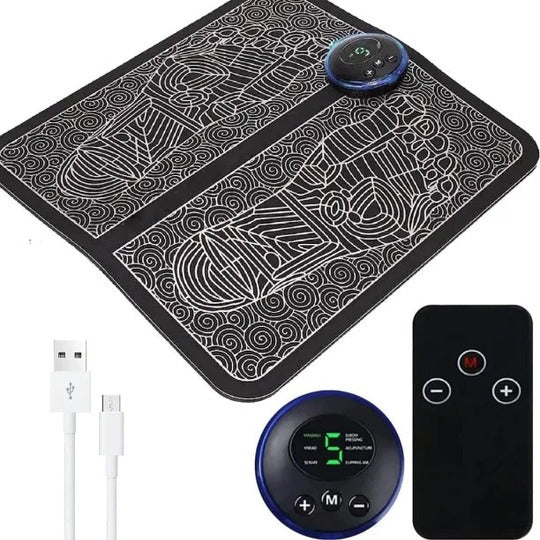
After a few weeks on Ornexis, the next device my feed kept pushing at me was the Domu Elevate EMS Neuropathy Mat from Domu Decor. The pitch is wide-coverage EMS for diabetic neuropathy, gentle pulse to wake up dead nerve endings, support for tingling, numbness, and "restoring foot sensation."
15 minutes a day on the mat, low-intensity pulse, the kind of routine you keep seeing in diabetes-focused YouTube reviews for sensation recovery over 8 to 12 weeks. My experience started to go sideways before I even unboxed the unit. At checkout, I picked what I thought was a one-time mat purchase. A few days later, I noticed an add-on cable charge I didn't remember agreeing to. That was my first red flag.
The mat did eventually show up, but the build didn't match the premium price on the site. The electrode pads were peeling at the corners straight out of the box, a couple of the surface contacts looked uneven, and when I ran a session at full power, the pulse felt softer than the spec sheet suggested. That's not a controlled lab test, obviously, but it lined up uncomfortably well with other people describing uneven pad contact and weak pulses or units that didn't feel as strong as advertised.
I still ran it for a full month. One 15-minute session a day, exactly as directed. The effects were... underwhelming for edema compared to Ornexis and even the Restural unit.
Domu Elevate reads like a dream device on the website: wide-coverage mat, good theory, lots of US-style testimonials, and a persuasive story about restoring foot sensation. In real life, the build quality, hidden charges, and price tag made it feel risky to keep in my rotation, especially when the actual results on my ankle slimness, sock lines, and end-of-day puffiness were no better (and in some ways weaker) than what I got from devices that are cheaper, more focused, and less stretched across multiple use cases.
PROS
Helpful for diabetic neuropathy specifically
Wide mat covers both feet at once
Gentle pulse pattern for sensation recovery
CONS
Most expensive option in this comparison
Add-on charges sneak into checkout
Some units arrive with peeling pads or weak contacts
Underpowered if your real problem is edema
My Top Recommendation After Months of Testing
🥇 Ornexis EMS Foot Plate
9,250+ Verified Customers
Calf-pump activated EMS pulses
4.6/5 on Trustpilot, 100-day guarantee
Up to 70% off in current flash sale
15 minutes daily, one button
No fluff. No fake tingling.
TRY ORNEXIS EMS FOOT PLATE
HIGH Risk of Sell-Out, sold out 12 times last year, trusted by 9,250+ customers
They back it with a 100-Day Money-Back Guarantee, so you can try it risk-free.
Look, I've tried it all. I've blown money on "top-rated" foot massagers, bargain Amazon mats, and every "miracle relief" gimmick TikTok could throw at me. After four weeks of testing EMS foot devices side-by-side, Ornexis is the only one I'm comfortable putting my name behind.
While you're reading this, someone else is:
Swallowing a 4 mg capsule that will never hit the clinical range used in human studies.
Plugging in a "premium" foot massager that only stimulates the soles, never the calf pump, so the fluid never moves.
Paying triple for a luxury-branded mat when the EMS module inside is the same generic chip.
You don’t have to be that person.
With one 12 mg softgel a day, taken with any meal that has some fat, you’re giving your body the exact dose and format that Japanese and European skin and joint studies used: calf-pump targeted EMS pulses, fifteen minutes a day, over four weeks of consistent use. That’s where they saw improvements in skin elasticity, hydration, fine lines, eye fatigue and joint comfort, not from the under-dosed stuff crowding Amazon’s “bestseller” page.
Is it instant? No. This isn’t caffeine. You need to give it a solid 6–8 weeks. But if you’re serious about one EMS device that can realistically reduce ankle puffiness, restore mobility, and bring back the lightness in your legs at the same time, Ornexis is the only one from my entire test that actually earned a permanent spot in my routine.
Once you feel the difference between “another foot massager” and a properly engineered, calf-pump activating EMS plate, you’ll understand why I keep asking the same question:
Why didn’t I just start with Ornexis?
VISIT SITE

Information on this site is provided for general educational purposes only and is not intended as medical or professional advice. Evaluations and rankings are based on independent research conducted in Q4 2025 under controlled review conditions; real-world results may vary. This site may include affiliate links, which may generate compensation at no extra cost to users and do not affect product rankings. Testimonials and examples are illustrative only. Purchase decisions remain the responsibility of the user.
© 2025 Living Well Insider. All rights reserved.
- Choosing a selection results in a full page refresh.
- Opens in a new window.